
Right to Repair in Defense Contracting: Why It Matters in 2025 and What You Should Do Now
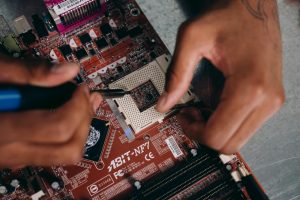
“Right to repair” is usually discussed as only a consumer electronics debate, but in federal acquisition it’s quickly becoming a readiness and affordability issue. Program offices want systems that can be fixed quickly, locally and without calling a manufacturer every time a fault appears. That shift has ripple effects across proposal strategy, IP planning, logistics and sustainment. For defense contractors the question is most likely how soon and how deeply will this affect me? For this reason, it’s advisable for companies to consider these questions when delivering proposals. This post explains the why and the how of Right to Repair, with practical steps to get ahead.
What Is “Right to Repair,” and Why Is DoD Paying Attention?
In defense contracting, right to repair means ensuring the government has what it needs to diagnose, service and return equipment to working condition. This could include things such as: technical manuals, parts lists, test requirements and access to software tools, keys and calibration data. This might feel like an assault on proprietary designs, however, it’s more about enabling timely, authorized repairs without vendor lock or weeks of delays for a quick repair. This is more about field-level troubleshooting that wouldn’t require shipping a unit back to the manufacturer for what could be considered a routine fix.
Why is this suddenly an issue?
- Readiness: Programs are measured on availability and downtime kills mission performance.
- Cost: Sustainment dominates total ownership cost, and single-source repair models get expensive fast.
- Resilience: Recent supply chain issues exposed how fragile long repair pipelines can be. Program managers are under pressure to buy systems that are maintainable, modular and/or supported by enough technical data to keep them running through the life of the contract.
IP Clauses Are Evolving—and You Need to Keep Up
Technical data and computer software rights have always mattered, but the way they’re negotiated is changing. Government teams are asking more involved questions up front. Questions such as: What data is necessary for operation, maintenance, installation and training? What diagnostics require OEM tools? Which interfaces are open versus black-box? Many contractors make the mistake of treating data rights as a minor detail to be handled late in the process, only to find themselves unprepared. The better strategy is to make your intellectual property plan a key part of your proposal from the start, connecting it directly to your project structure, pricing and risk management.
Practically, this means segmenting your deliverables: identify what you can disclose versus what you will license. Document your rationale, align it with pricing and offer clear options in the proposal. Most program offices will appreciate the transparency, and clear options make their evaluations easier. They also reduce post-award disputes that can dent schedule, margins and relationships. If you sell sustainment services, plan for a world where customers still expect your expertise… but maybe not exclusivity for routine fixes.
Lifecycle Costs, Sustainment, and the TOC Equation
Right to repair is a key component of Total Ownership Cost (TOC) because repairability affects everything from spare parts or devices to training time. Contractors that design for maintainability can quantify it: lower Mean Time To Repair (MTTR), higher Mean Time Between Failures, fewer unique tools and modular Line Replaceable Units (LRUs). Those numbers translate into clearer provisioning, faster turnaround and tighter availability forecasts. This will be exactly what evaluators want to look at when they’re comparing similar bids with mostly similar performance claims. When a contractor can show how their maintenance concept reduces downtime and shipping, they’re providing a tangible value to the evaluator.
This will also influence the sustainment business model. There’s a big difference between losing some business to in-house basic repairs and losing all aftermarket revenue. Smart contractors offer advanced services, predictive analytics and upgrade plans instead of just focusing on each repair. Offer training, calibration and overhaul packages that leverage your unique know-how, while furnishing the government the data it needs for day-to-day maintenance. That balance preserves revenue, improves sustainment scores and aligns with where acquisition policy is heading.
The Business Risk of Ignoring Right to Repair
Treating right to repair as a “post-award” issue to deal with is an easy way to uncover some unpleasant surprises. The immediate risk is that evaluators are increasingly scoring proposals on maintainability, data deliverables and support concepts, no longer only focusing on performance and price. If your submission hand-waves diagnostics, limits access to technical data without a rationale or relies on OEM-only tools, you are inviting additional rounds with clarification requests that will burn through your schedule and reduce evaluator confidence. Post-award, the risks will only multiply, disputes and delays in approving technical manuals and finger-pointing when the units sit idle waiting for a diagnostic tool login are all but a certainty. Those delays show up in CPARs under Quality, Schedule and Management; once there, they follow you.
There’s also a strategic risk to your revenue. When you resist reasonable repair access, customers look for alternatives that will work around your closed system. What feels like protecting IP can morph into commoditization if the government responds by prioritizing open architectures and modularity in future buys. The fix isn’t to give everything away, but it’s going to draw attention to the line between what the government needs to maintain readiness and what remains your proprietary edge. If you don’t do it proactively, a contracting officer or protest will do it for you.
A New Competitive Advantage in Defense Contracting
Right to repair can be a way to differentiate from competitors when performance claims are clustered. If three bidders meet the threshold spec, the one who is able to provide a lower downtime, faster troubleshooting and clearer data deliverables will have the edge. One way to prove this is to use demonstrations: a short video or written annex walking through a real fault isolation with standard tools and provided manuals is more persuasive than a paragraph promising something vague such as “robust support.” Show the contracting agent how your interface control documents enable safe third-party diagnostics without exposing IP. If you sell software-heavy systems, highlight your secure key management and role-based access systems that allow government maintainers to do routine resets and updates without compromising cybersecurity.
Conclusion
If you’ve made it this far, you understand that right to repair is not a threat to be dodged. It’s a constraint to be designed within, and potentially a lever with which to win bids. Contractors who plan their data rights, quantify maintainability and align sustainment business models will spend less time in clarifications, earn stronger CPARs and outcompete closed system offerings. This results in a win-win, where the government gets faster, cheaper repairs and higher readiness and you get predictable execution and stickier long-term relationships built on transparency and performance.
Are you ready to put in a bid, but want to ensure you stay compliant? Contact us to see how Odyssey DCS can help you.